Monster Hunter: Why the Hunt Feels Right
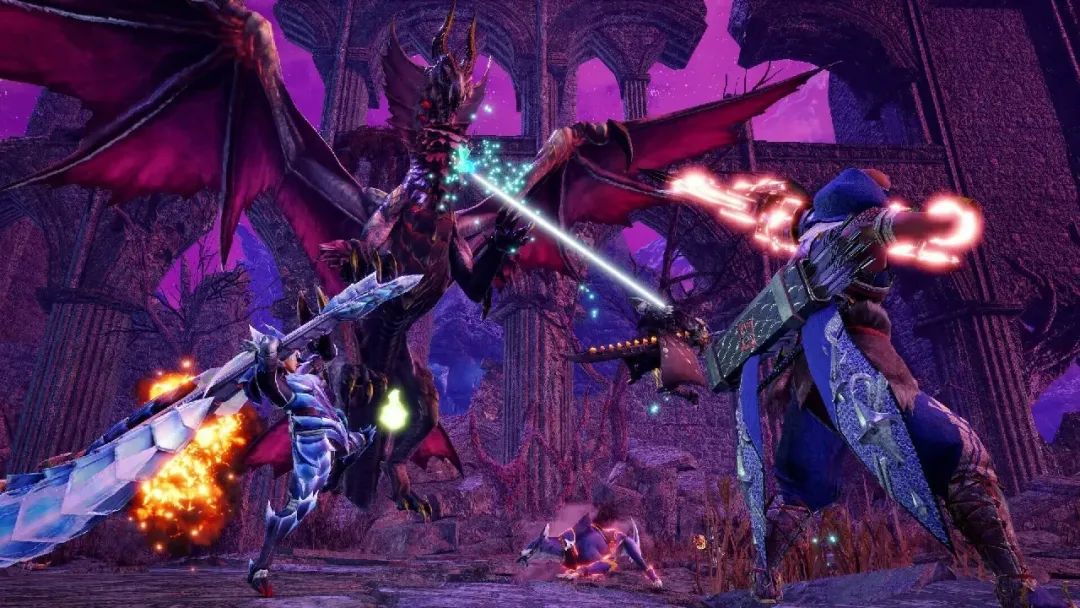
I have played Monster Hunter for years, and the thing that keeps me coming back is simple: the hunt. The series has twenty years of history, so I will not pretend to cover everything. I just want to focus on how the games protect the feeling of hunting a creature stronger than you.
The Core Feeling: Hunting Something Bigger
- Rise and Sunbreak still carry the series aesthetic: hunting big, dangerous monsters.
- The fight is fundamentally uneven. The monster is faster, larger, and more threatening.
- Your skill closes that gap, not your stats alone.
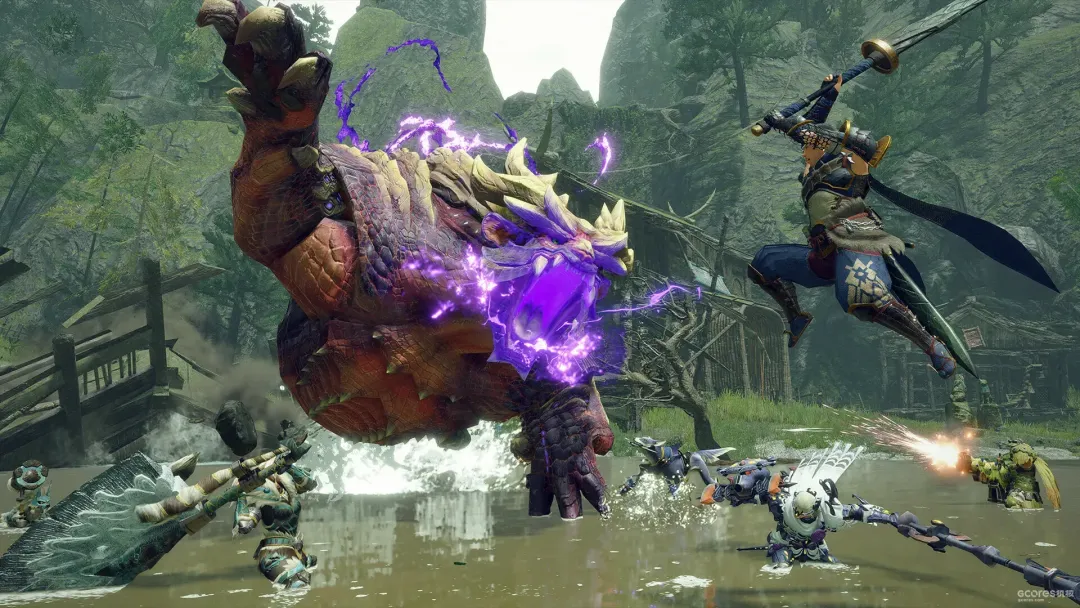
That imbalance is the point. It makes every win feel earned.
The Combat Loop: Uneven Duels
Here is the loop I see every time I play: I read the monster’s behavior, weigh my position, stamina, and weapon state, then respond for a reward window. It sounds generic, but Monster Hunter makes it concrete in a way most action games do not.
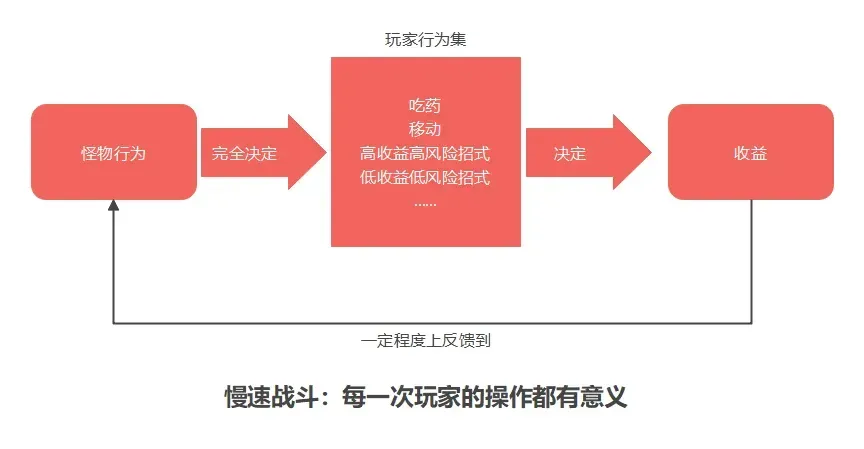
- You are solving the monster, not freestyling your own combo.
- Most damage comes from finding a safe opening, not spamming attacks.
- The more you understand the moves, the more openings you earn, and the loop feeds itself.
The monster has to feel dominant, but not unfair. The series solves that with contrast: the hunter is deliberate, the monster is athletic. Heavy windups and recovery make your moves precise and costly. The monster has bigger ranges and wider angles. That contrast creates the “weak vs strong” vibe that makes the hunt heroic.
3C: Movement and Control
Movement is grounded. You are not a ninja. There is no jump and terrain can be awkward. It keeps things weighty.
Control is also strict:
- Long windups on many attacks
- Some moves have long, uncancelable recovery
- No homing or auto-aim
- Attacks do not freely turn
- Few cancel options
- Deep input chains
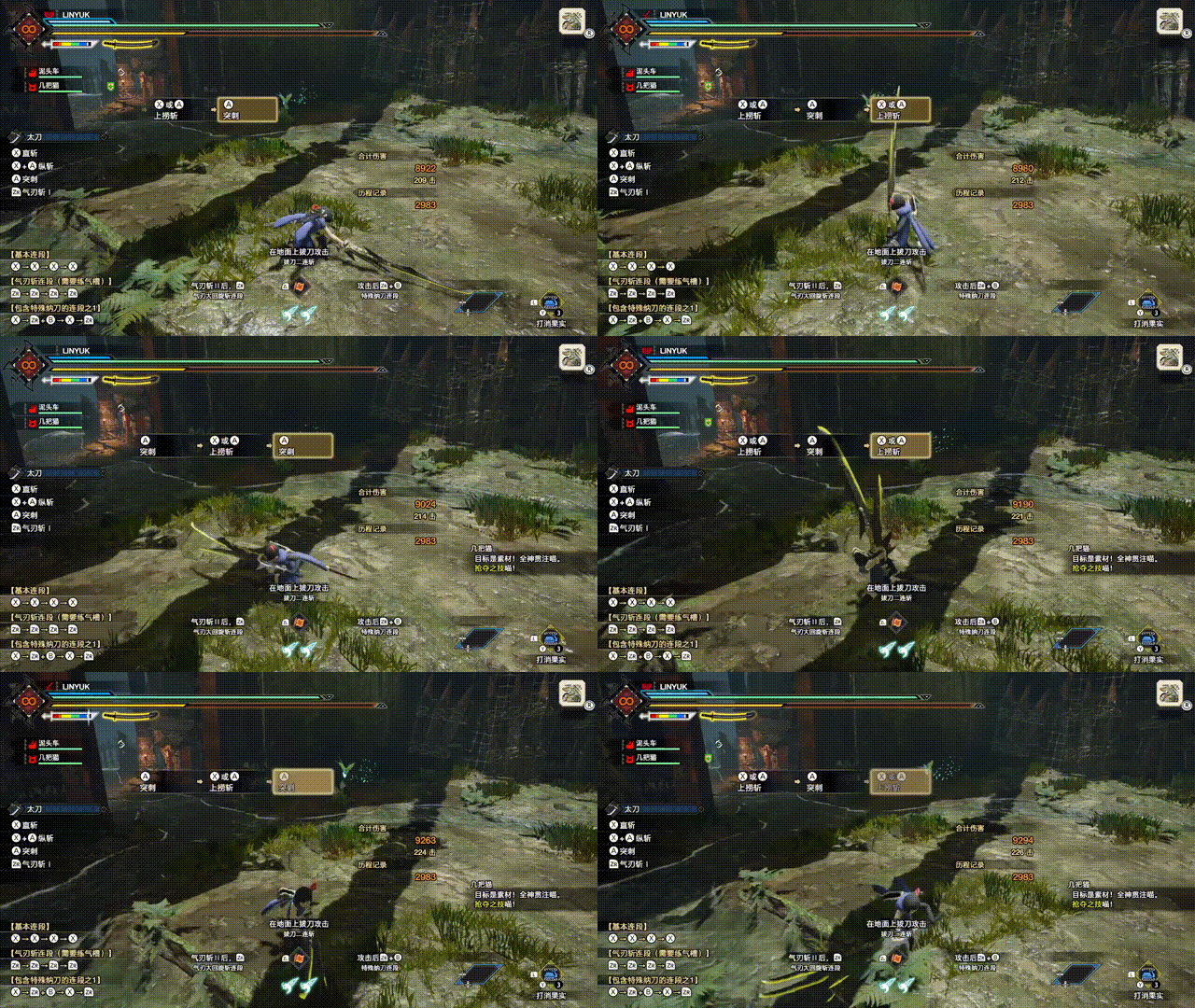
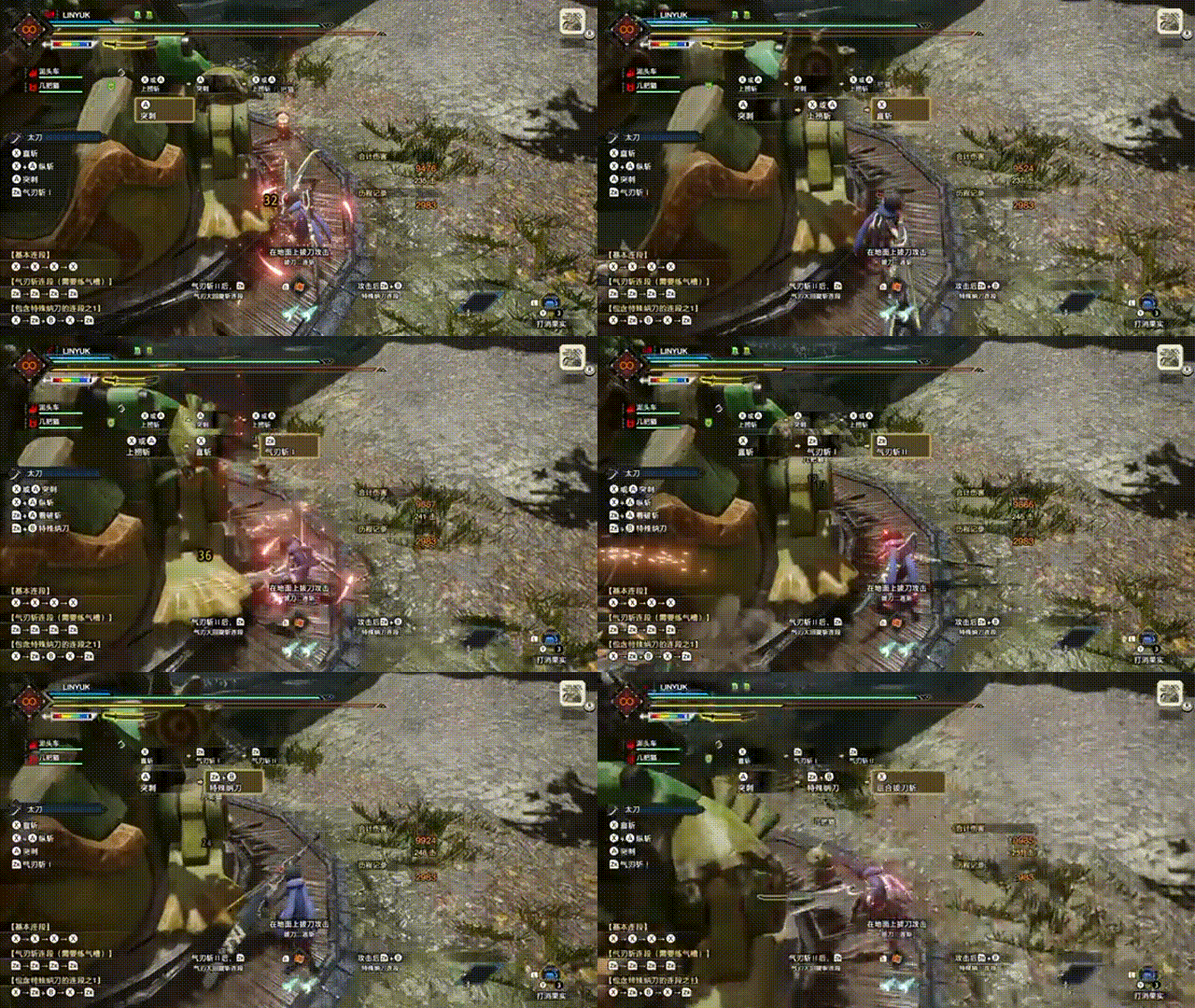
Those limits make every swing intentional. You feel the space, which later makes the hitzone system matter.
Camera work is restrained too. There is no hard lock-on, and there are fewer dramatic zooms. That keeps the fight readable and real.
Monster Design: Readable and Consistent
Monster Hunter does not just make cool monsters. It makes monsters you can read.
- Moves align with anatomy and posture.
- Windups are clear enough to learn mid-fight.
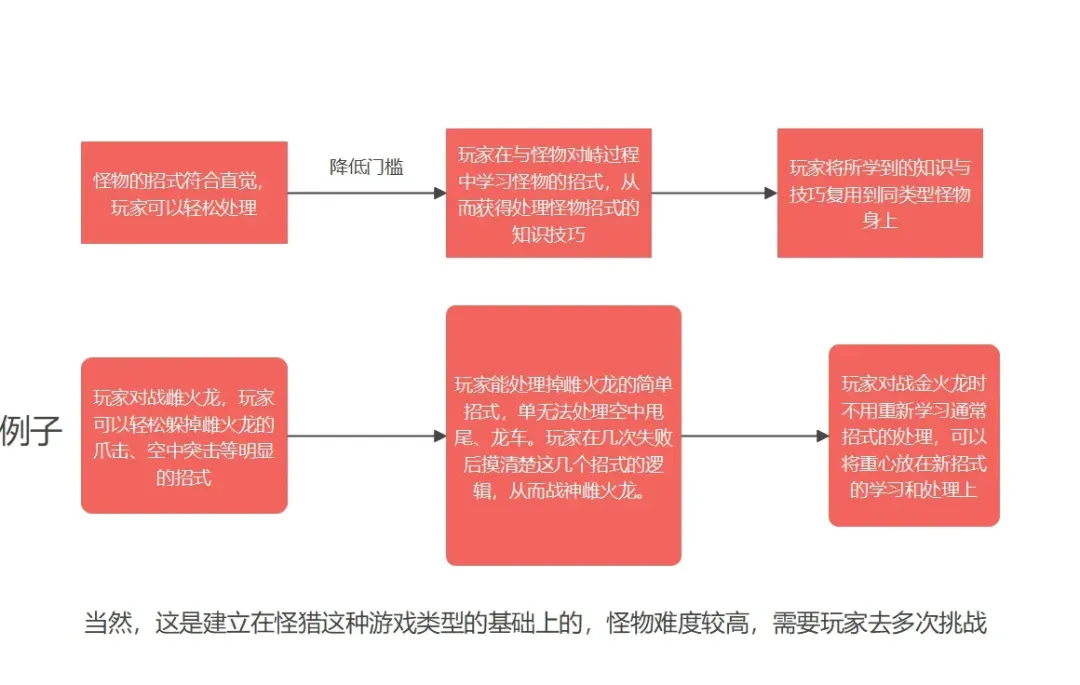
- Families share logic, so knowledge transfers.
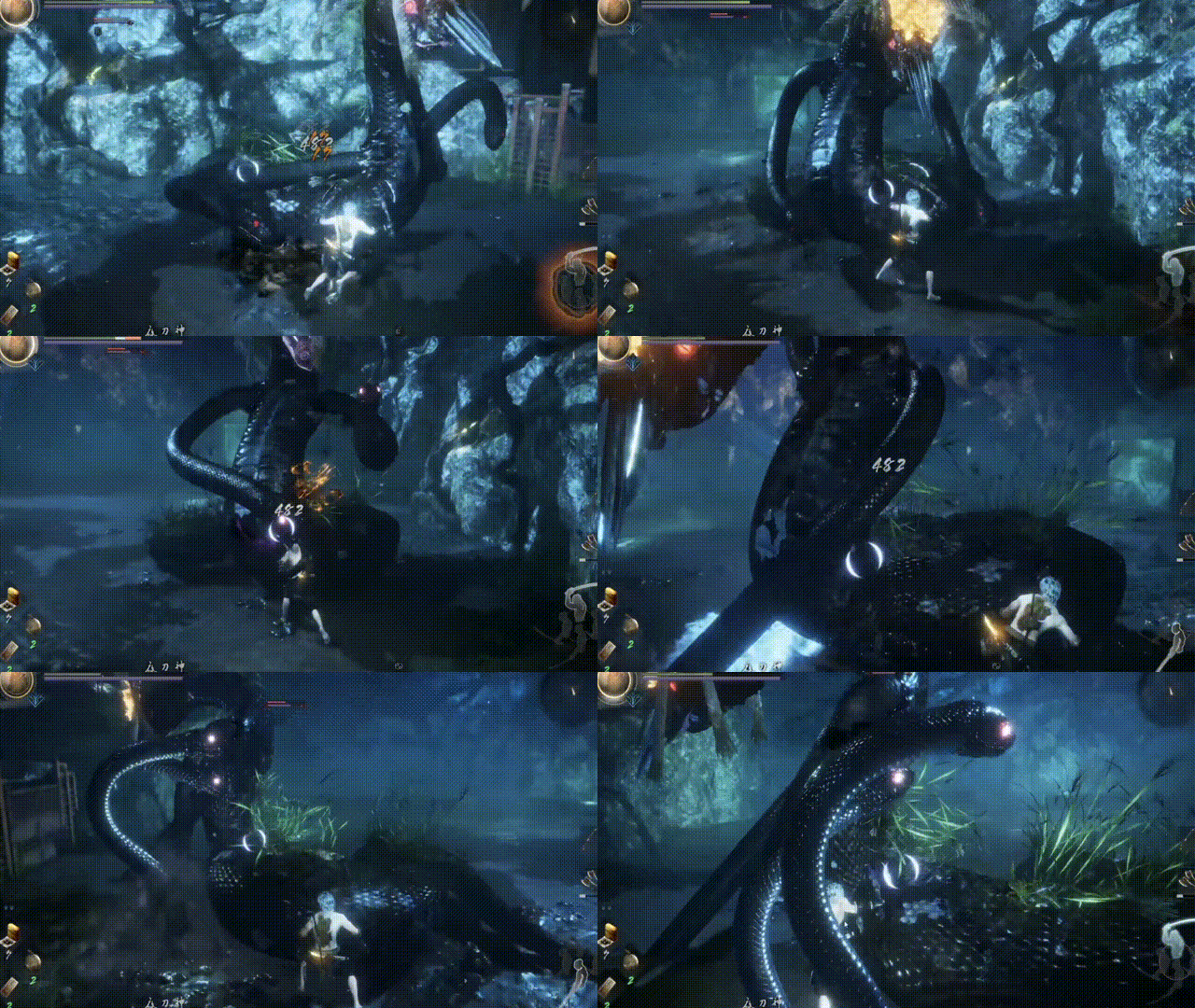
The best monsters feel intuitive. Nargacuga moves like a cat. It coils, raises a paw, tucks its head, then strikes. You can learn its language.
Moves, Cancels, and Meaningful Chains
I once built a combat demo inspired by Monster Hunter, and I failed hard. I had a combo tree, but none of it mattered. The question I could not answer was: why do this chain, instead of another?
Monster Hunter answers that constantly. Every move does something. It may change position, turn your character, or set up the next resource state. Damage is only part of the story.
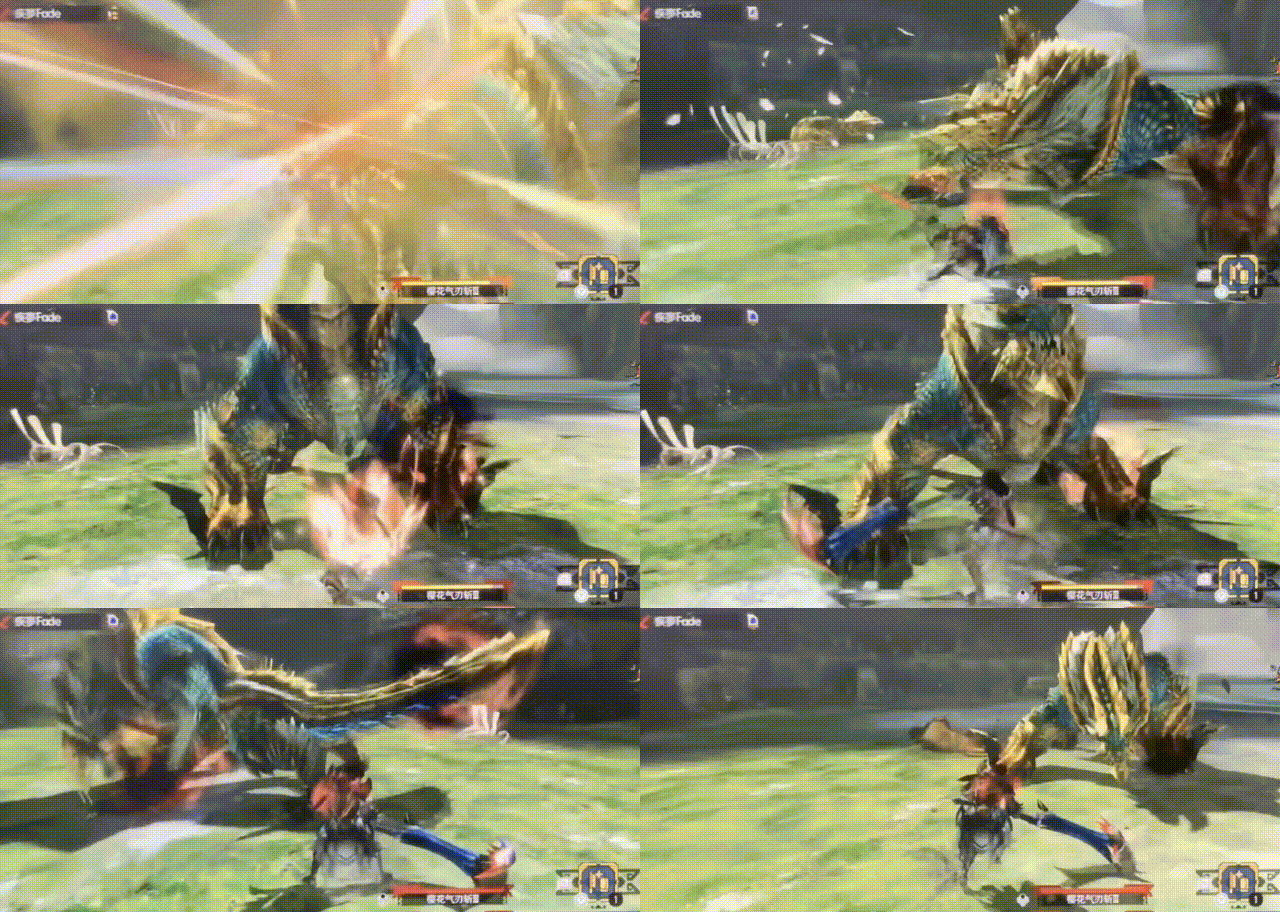
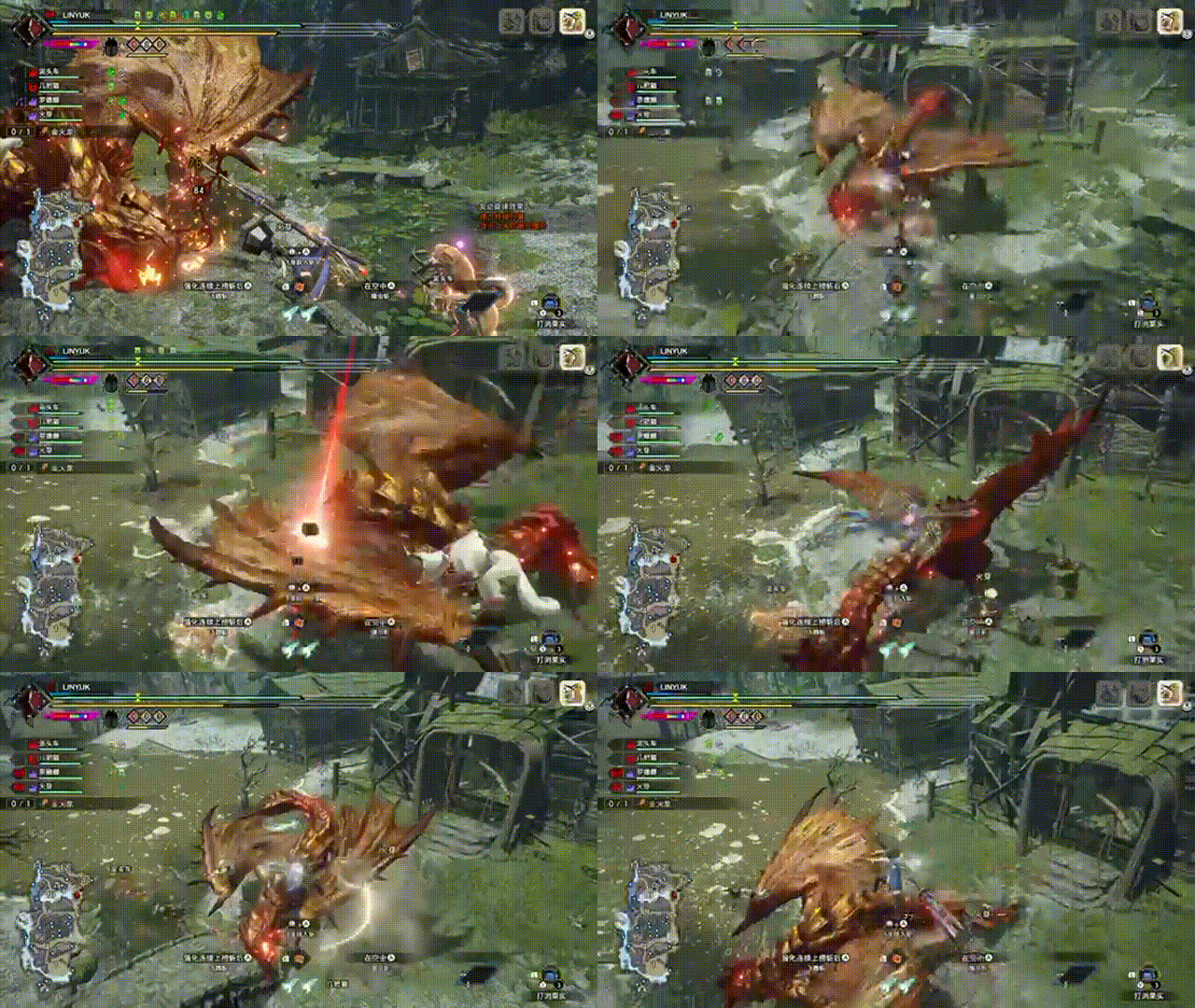
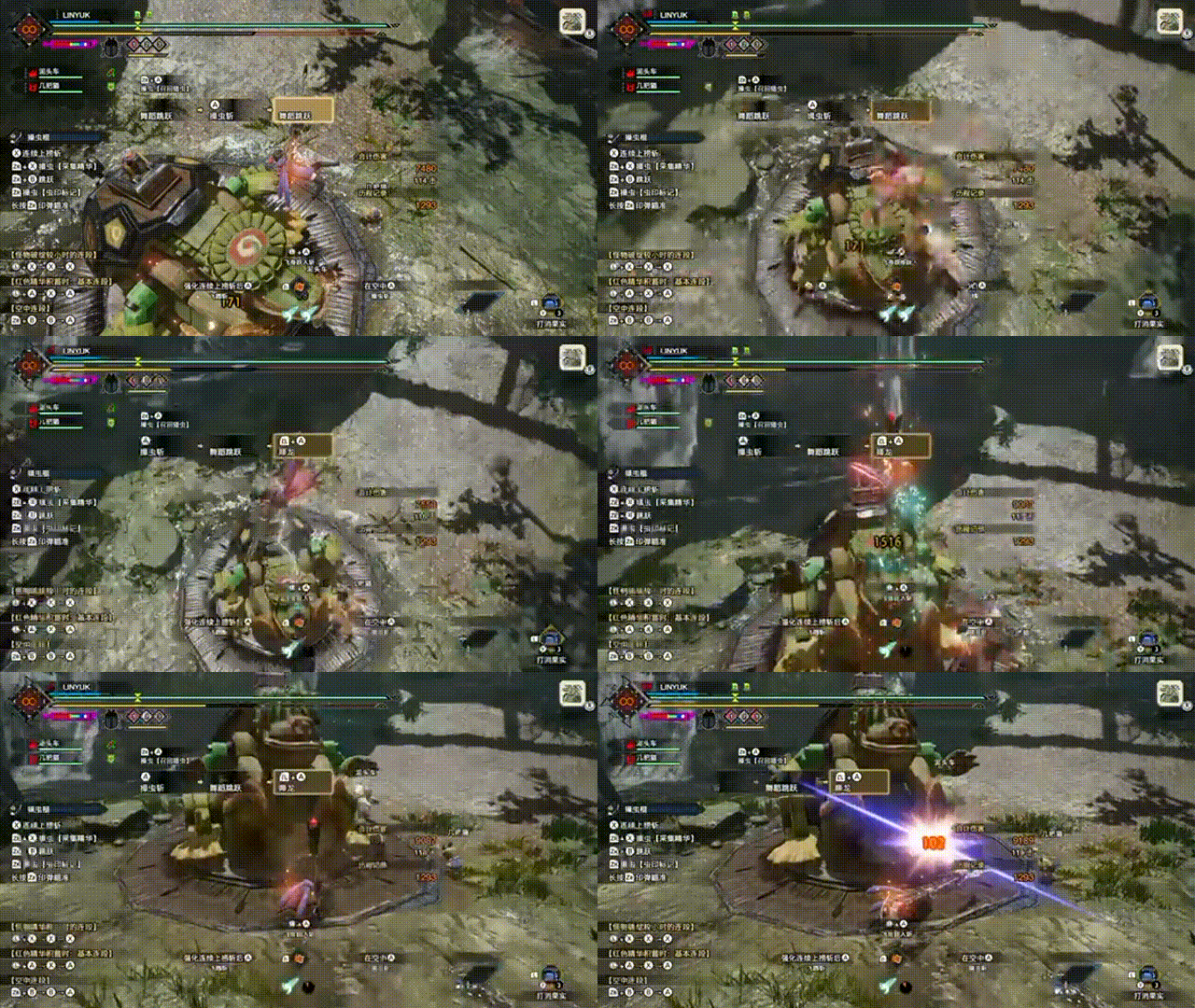
Take the Insect Glaive. Players love the high-drift spinning slash. It hits hard, but it also repositions you. The long recovery is real, but the kinsect recall can cancel it. That gives the combo a purpose beyond raw numbers.
Resource Management
The series uses resources to create short-term goals: stamina, ammo, phials, spirit gauge, and so on. These systems vary by weapon and create distinct play styles.
In newer entries, resource mechanics are more prominent. They are easier to understand than spatial nuance, so it makes sense that the series leans into them. The trick is keeping them from drowning out positioning, and Monster Hunter mostly keeps that balance.
Hit Zones and Part Breaks
- Different parts take different damage.
- Head is usually best, limbs often next, underbelly lower.
- Parts can break after enough damage and then take more.
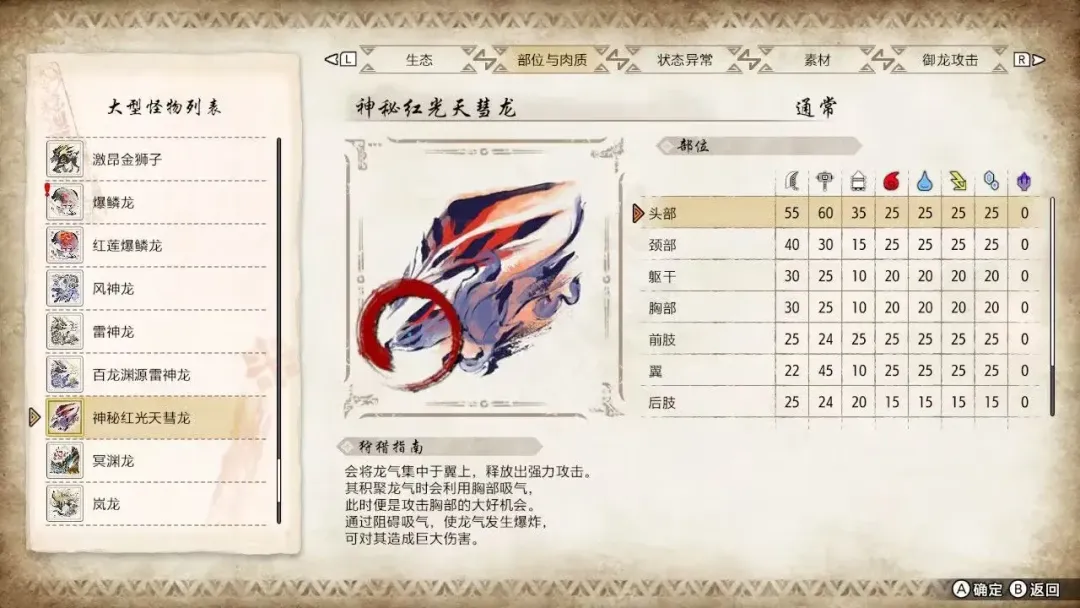
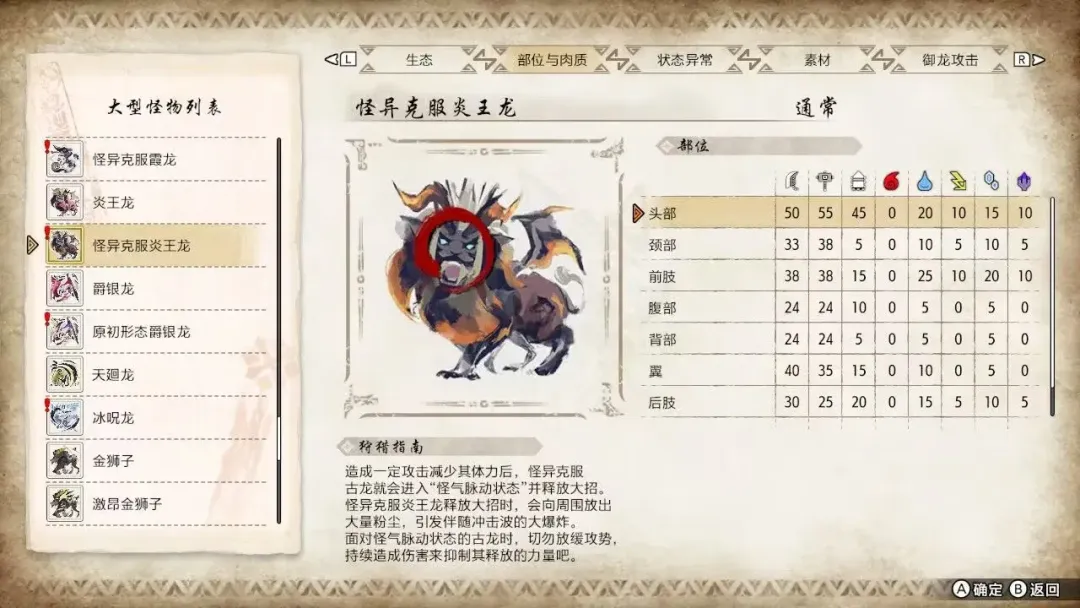
This system only works because the game is slow enough to let you aim, and the penalties are real when you miss. It adds spatial meaning without adding extra buttons.
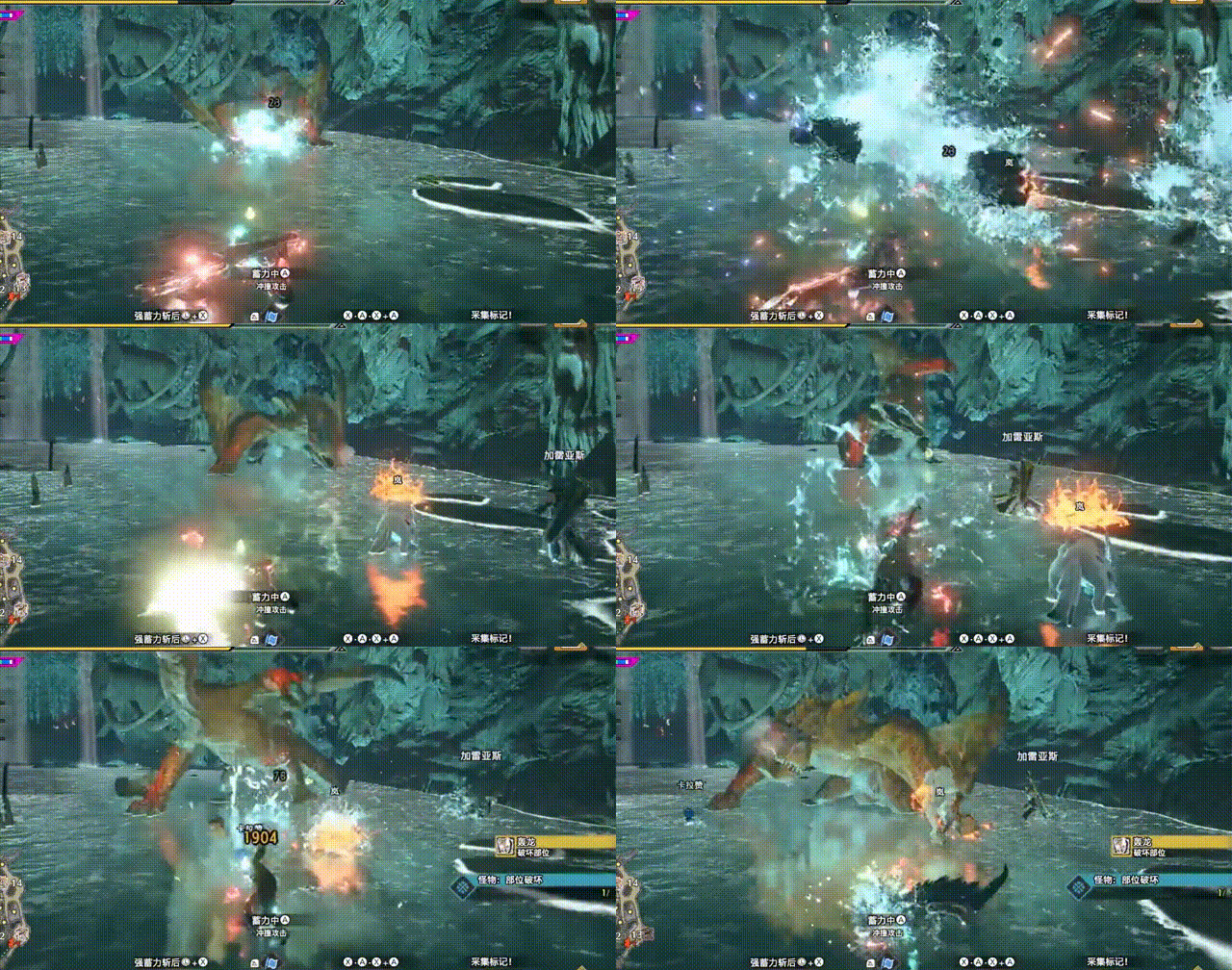
Part breaks create dramatic momentum shifts. The monster has no normal flinch animation, so a big stagger or break is a huge payoff. It is the game’s version of a highlight reel.
Presentation: Who Gets the Spotlight
Hunter Presentation
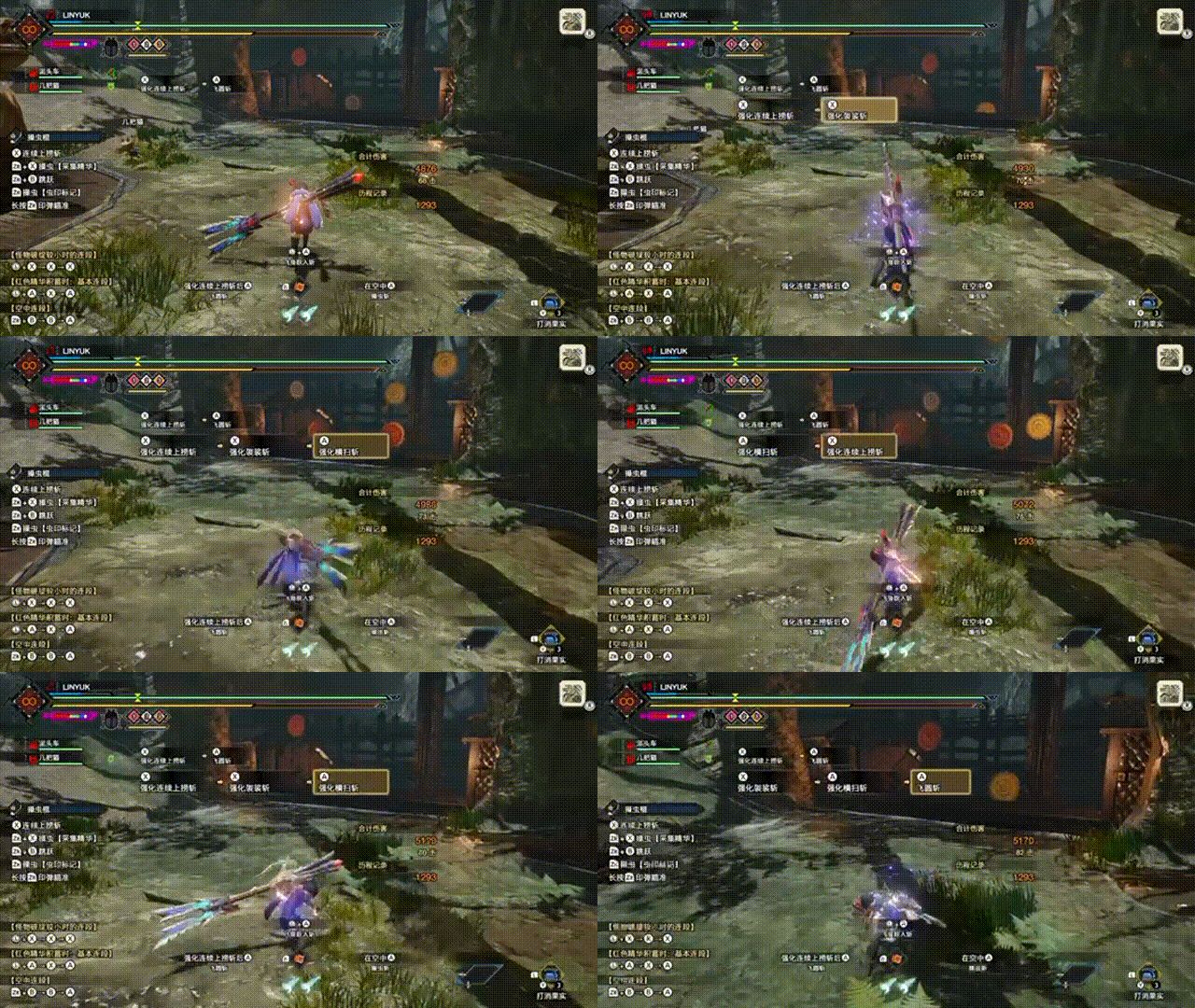
Hunters are intentionally plain. You are a rookie with a big job, not a stylish superhero. That keeps the hunt epic instead of flashy.
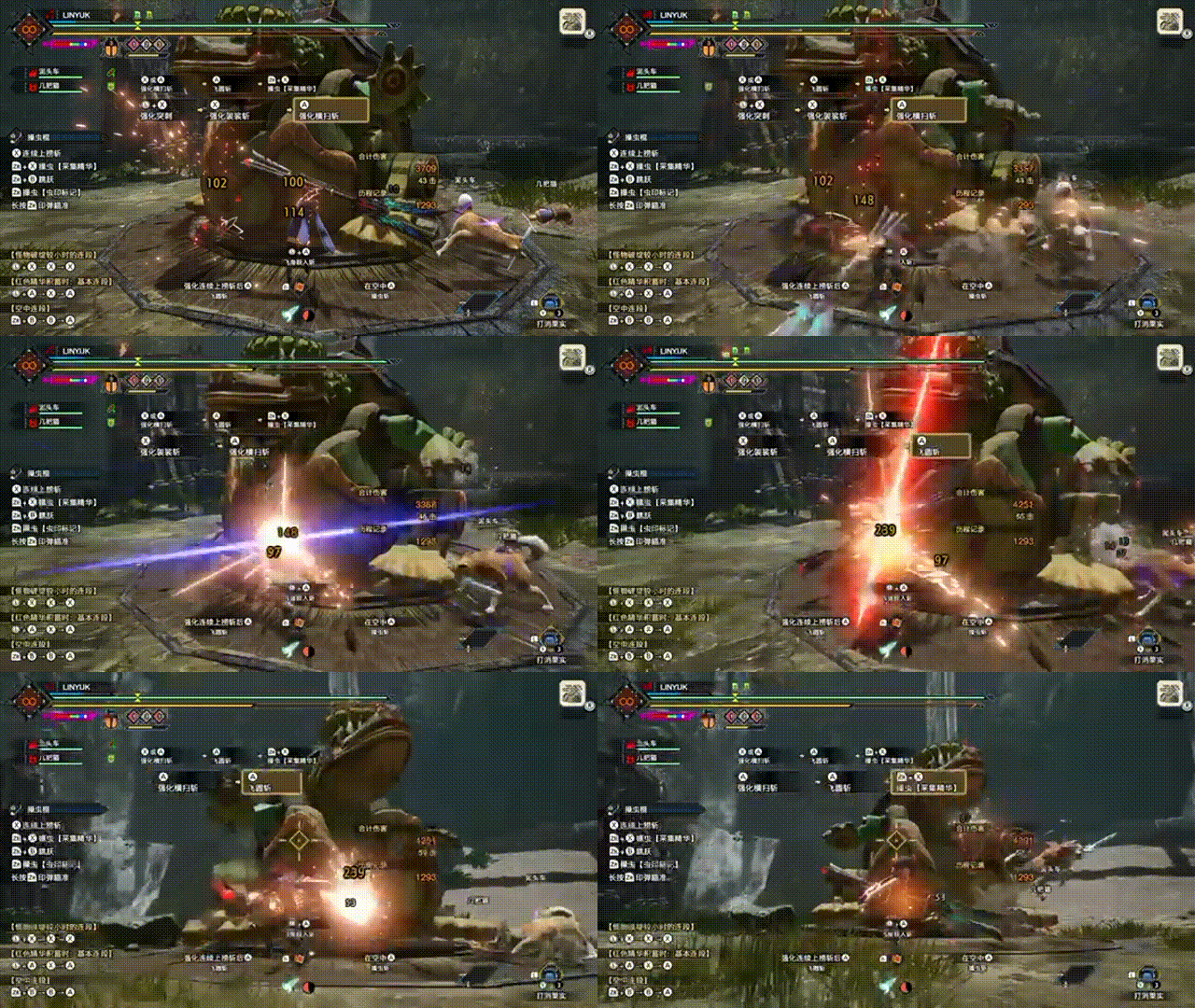
Attack effects are modest. Camera shake and zoom are restrained.
Monster Presentation
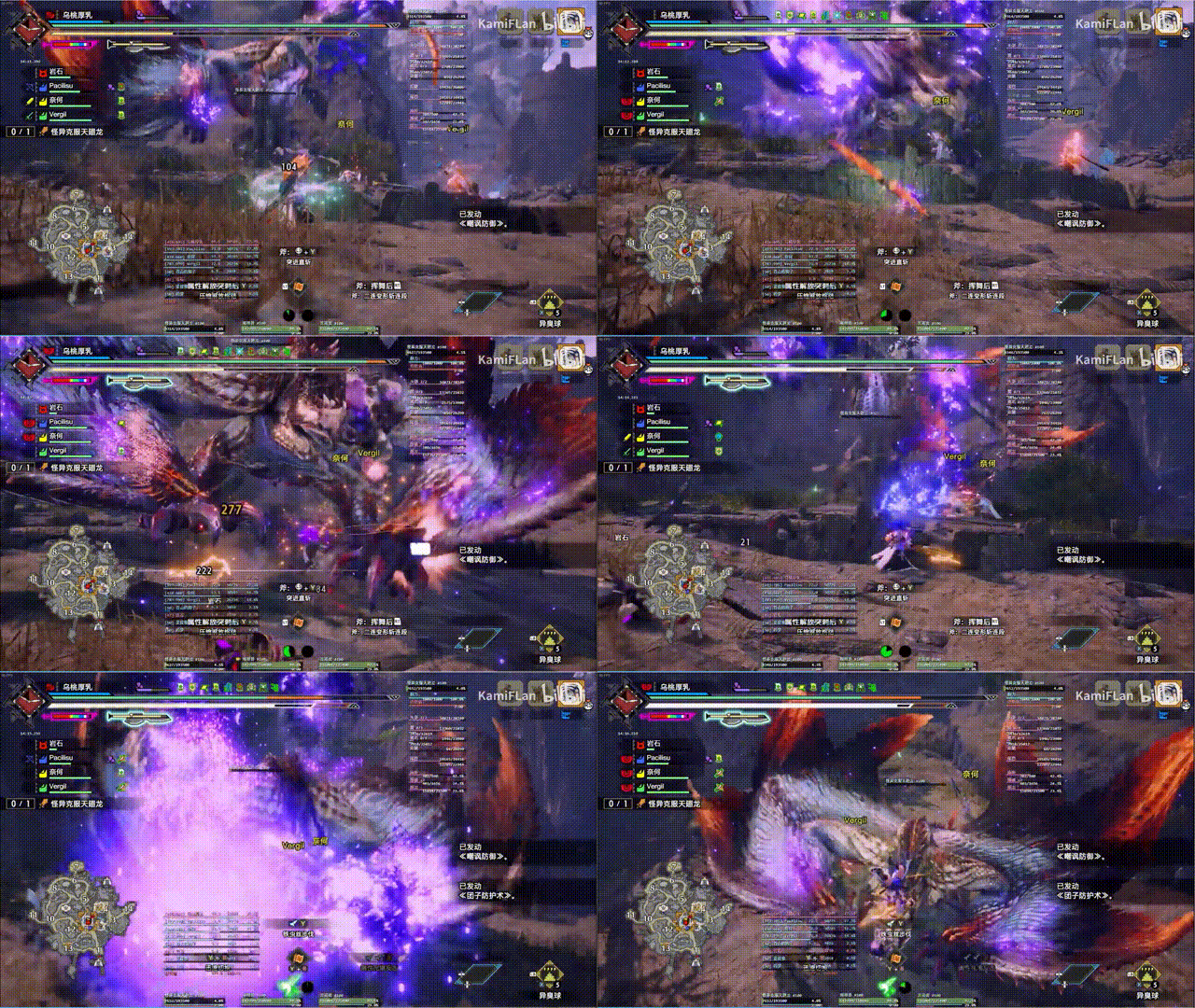
Monsters get the fireworks:
- Strong silhouettes and distinct colors
- No health bars, big health pools
- Huge effects for advanced monsters
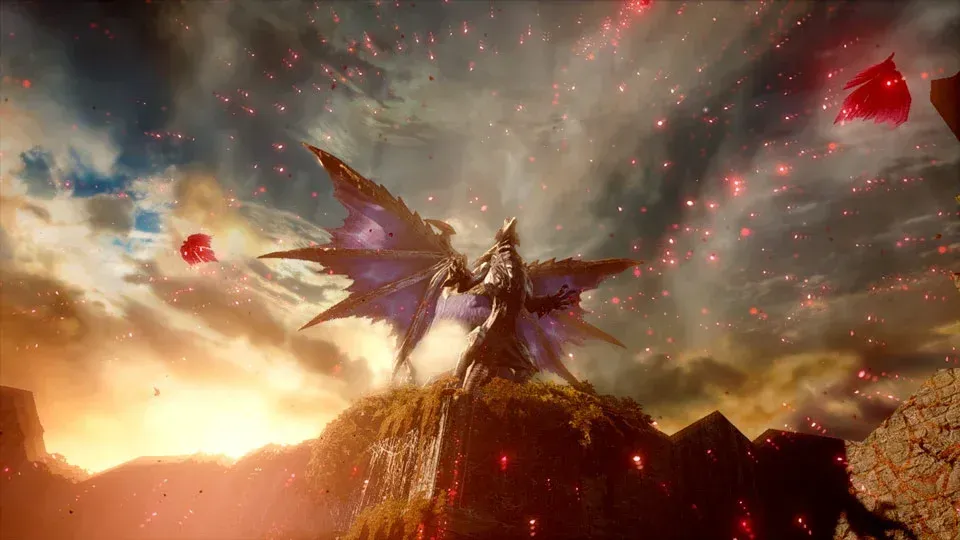
Even in similar-colored environments, the monsters read clearly. You can see the skeleton and predict reach.
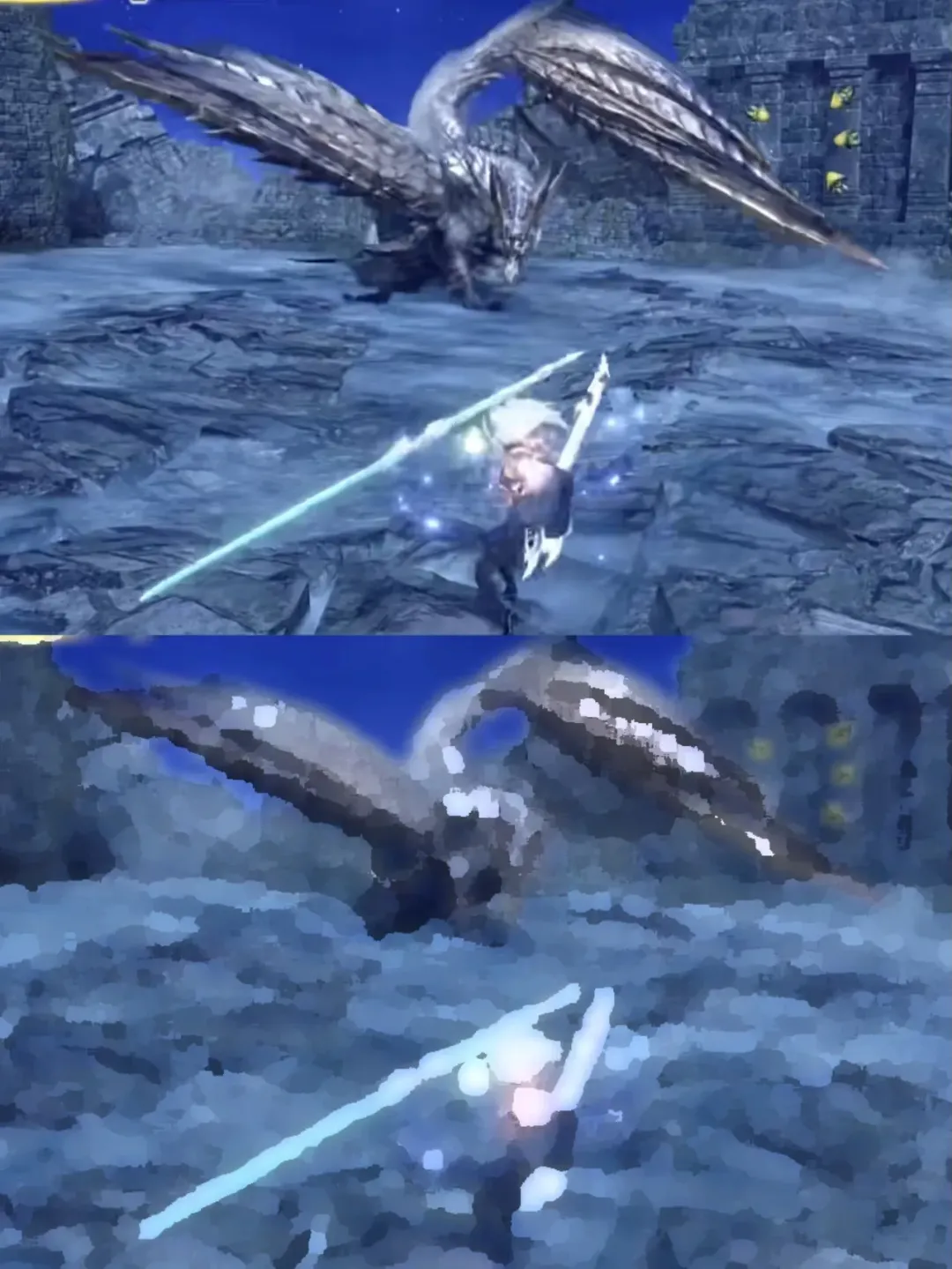
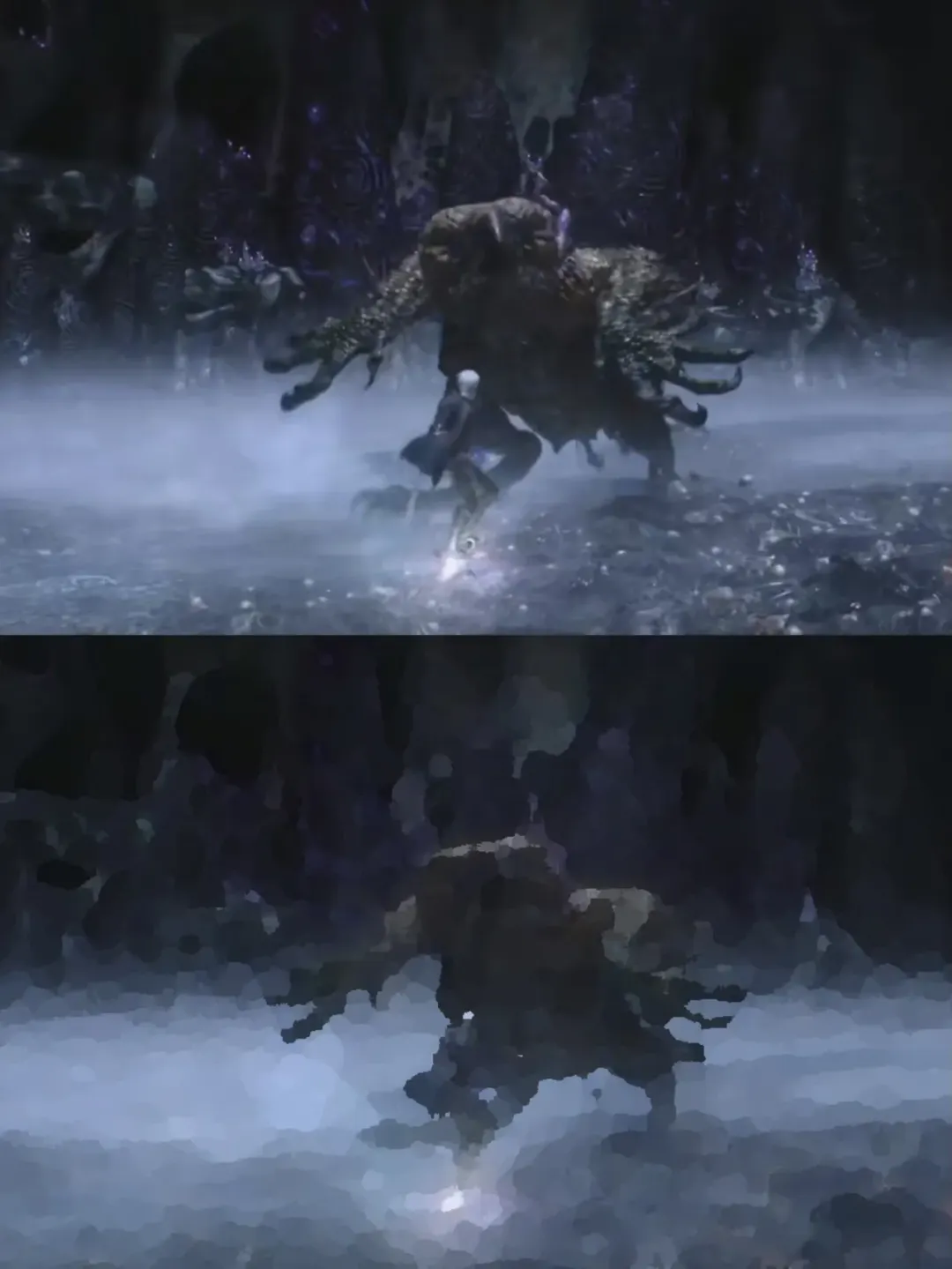
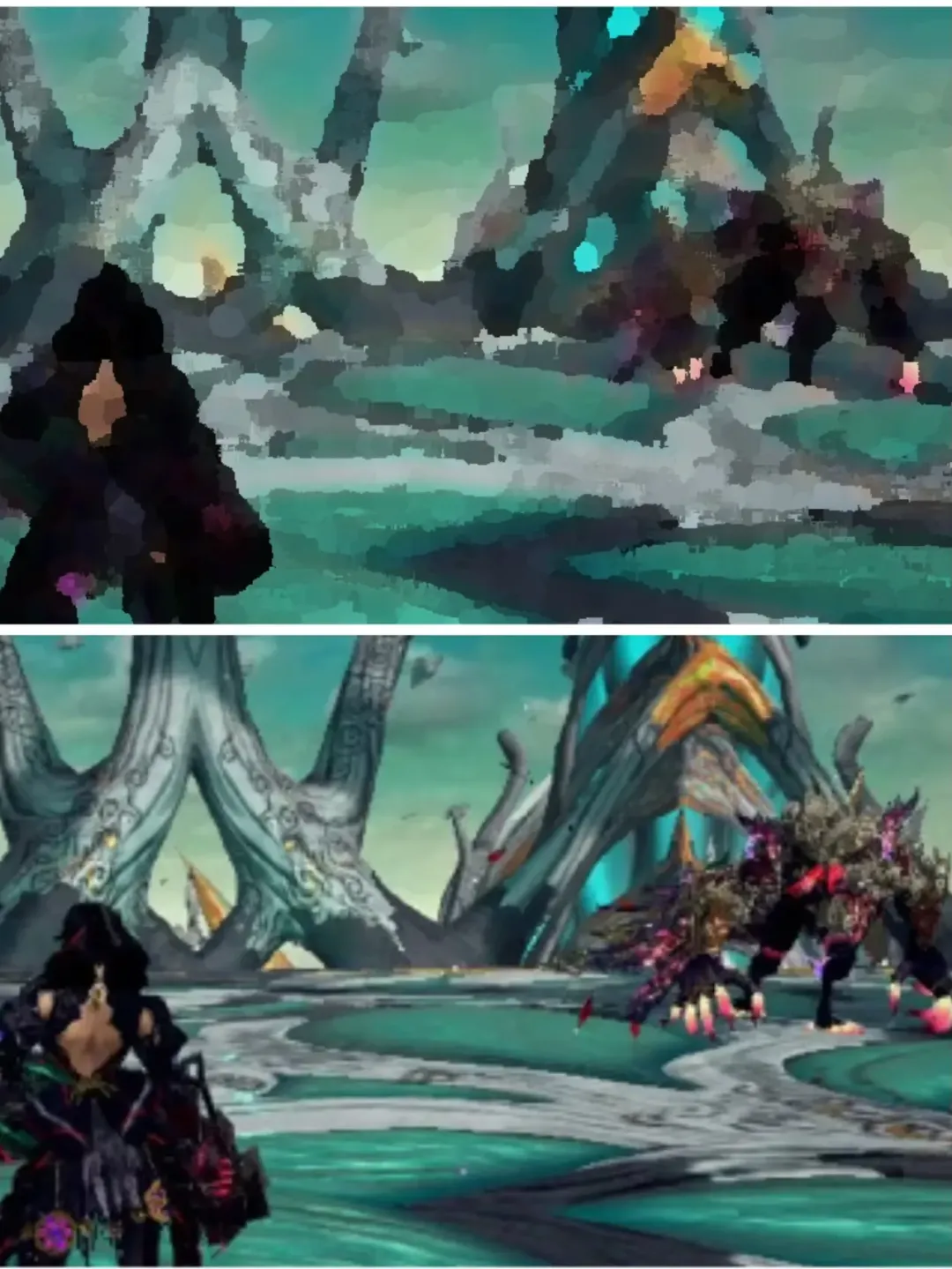
Different games solve readability in different ways. Monster Hunter chooses clear silhouettes over flashy effects because your positioning depends on it.
Hit Feel
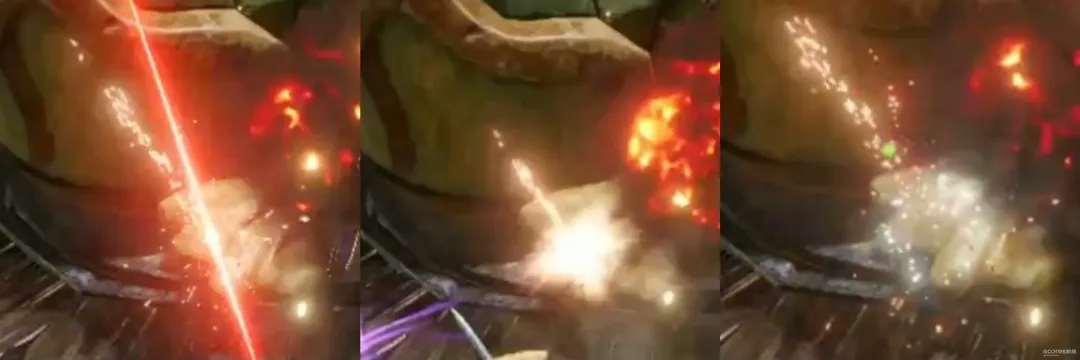
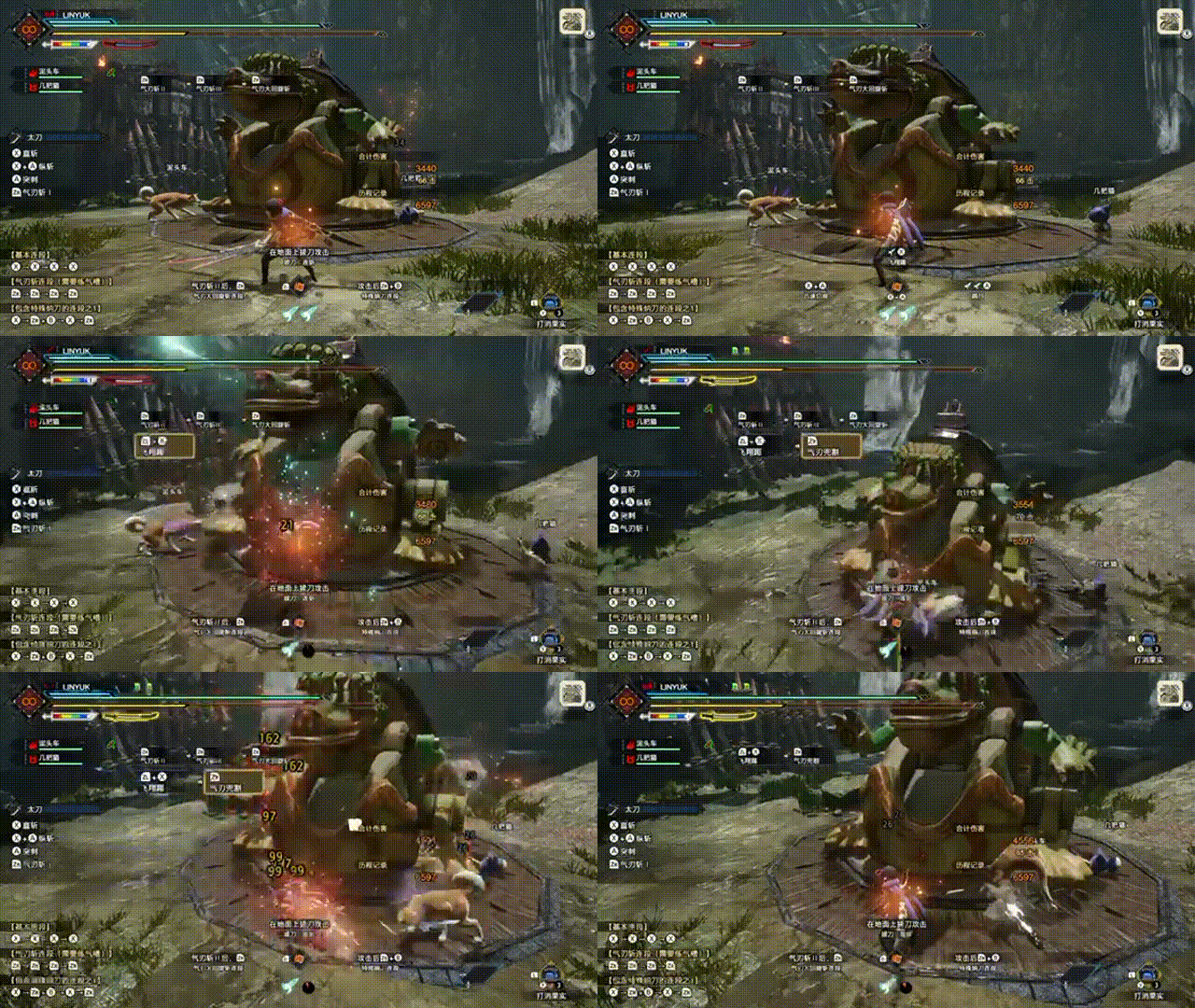
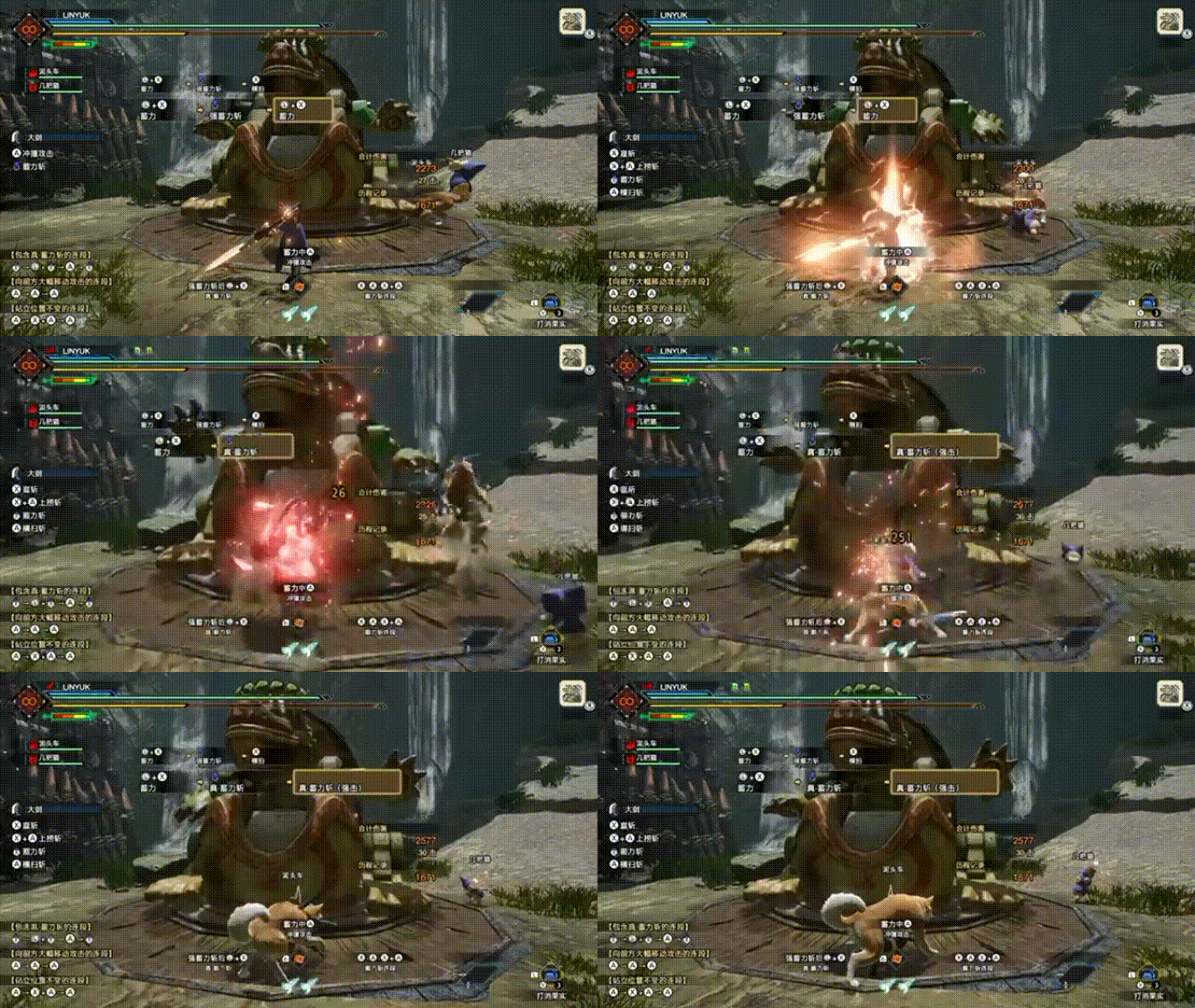
The foundation is animation. The hit sparks are big, and the feedback is sharp. Freeze frames and camera shake do most of the work, not layered effects.
Rise and Sunbreak: Change Without Losing the Core
Wirebugs
Wirebugs fixed three problems at once:
- Traversal across big maps was slow.
- Monster move sets kept getting more complex, raising the entry barrier.
- The team wanted more depth like the older style system.
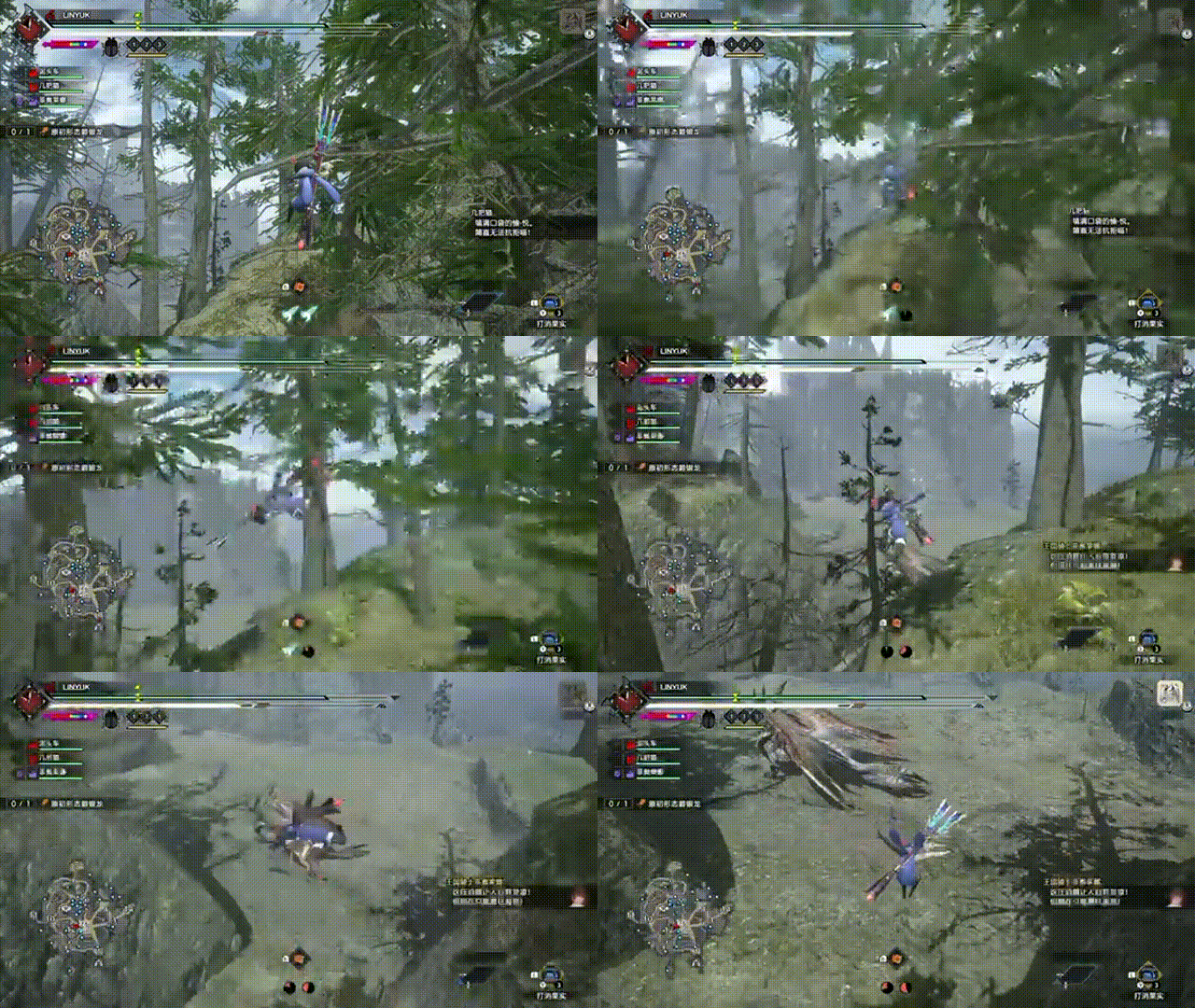
Wirebugs solved mobility with dashes, softened mistakes with wirefall, and added depth through Switch Skills.
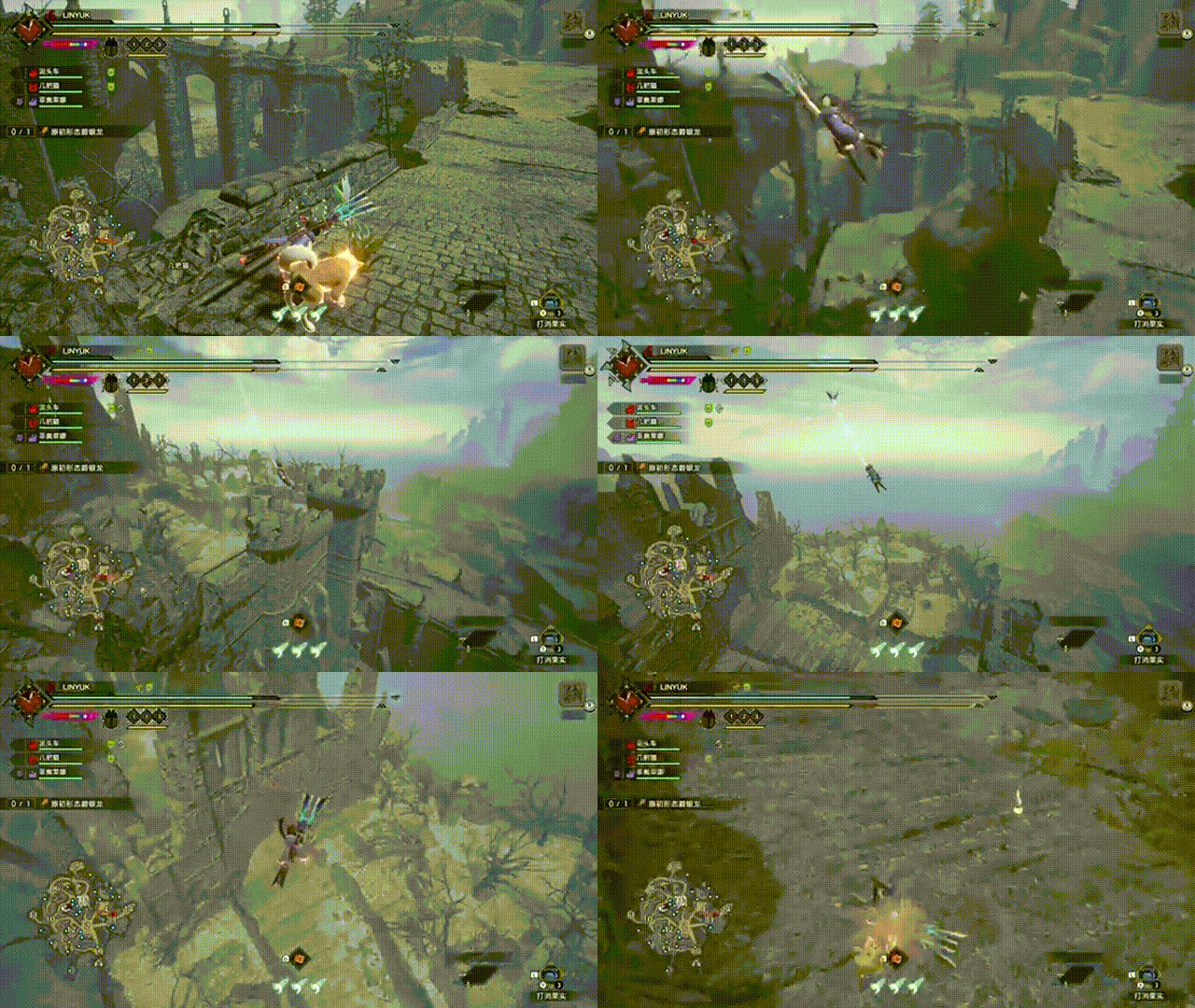
Wyvern Riding, Endemic Life, Spiribirds, Palamutes
Wyvern Riding is a tempo break: a reliable way to deliver big damage.
Endemic life folded the old mantle system into the world itself. Spiribirds reward exploration with temporary buffs. Palamutes solved basic travel friction. These systems help players without forcing them. You can ignore any one of them and still have the same core hunt.
Anomaly Monsters
Anomaly monsters add a weak-point burst system that acts like a mini part break. It tightens the feedback loop and gives every fight a series of small goals. The eruption timer keeps pressure high, and the Bloodblight mechanic pushes aggressive play.
Closing Thoughts
This series succeeds because it is disciplined. It knows the hunt is the star, and every system, from hit zones to traversal, bends toward that single feeling.
I am sure I missed things, but the point is simple: Monster Hunter works because the hunt feels honest. You do not win because the game hands you a moment. You win because you learned the monster.